Choosing paint and finish.
The right paint for each room makes a bigger difference than the brand. Here is how to choose the finish, read the tin and pick a colour you won't regret.
Book your free on-site quote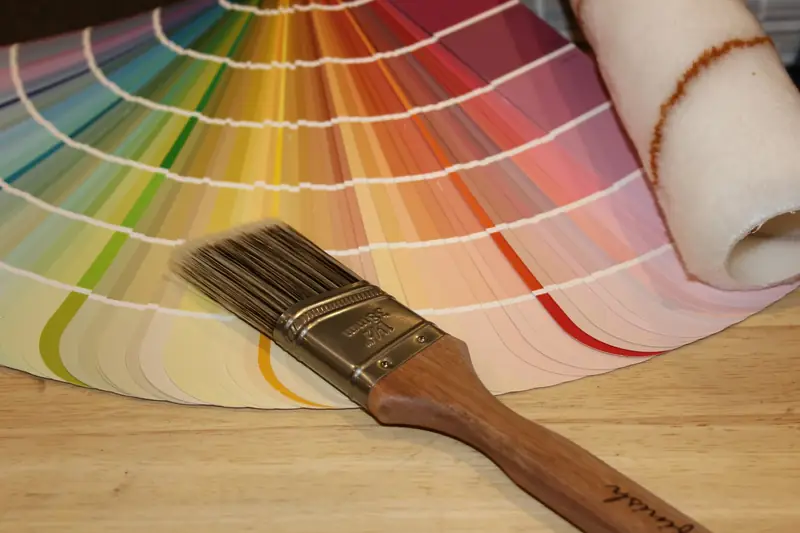
Short answer
Use a matt or flat finish on ceilings and on walls in bedrooms and living rooms, a washable eggshell or satin in kitchens, corridors, children's rooms and bathrooms, and satin or gloss on doors, frames and skirting. Check the tin for the product type, the spreading rate and the VOC information that Hong Kong requires on the label, and choose your colour by brand and colour code.
What you need
- The brand's colour fan deck or swatch cards
- Two or three sample pots
- A large piece of white card or lining paper for test patches
- Painter's tape
- Phone camera, to note the brand, colour name and code
Step by step
List each room and how it's used
Write down every room and surface: ceilings, walls, doors, frames, skirting, metal railings. Note where there is steam, grease, sunlight or a lot of hands and furniture, because that decides the finish.
Choose the finish for each surface
Use the table below as a starting point. The shinier the finish, the more washable it is, and the more it shows every dent in the wall.
Narrow the colours with a fan deck
Pick colours from one brand's fan deck so you have an exact name and code. Colours look darker and stronger on four walls than on a small chip, so many people choose a shade lighter than their first pick.
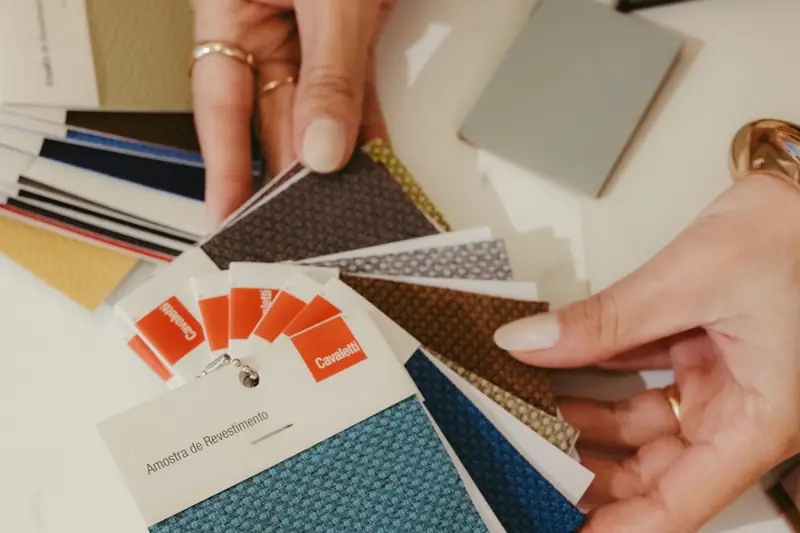
Test patches on the real wall
Paint test patches on card or lining paper and tape them to different walls. Look at them in the morning, in the evening and under your own lights. North-facing rooms and rooms facing a nearby building look cooler and darker.
Read the tin before you buy
Check the product is meant for your surface (interior wall, ceiling, wood, metal), the spreading rate per litre, the recoat time, and the VOC information on the label. Buy enough of one batch for each room.
Record the brand and code
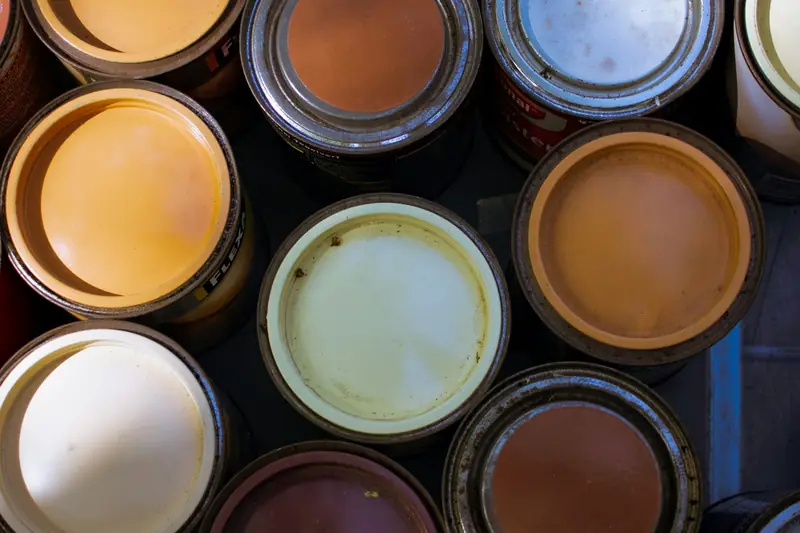
Keep a note of the brand, product, colour name, colour code and finish for every room. Touch-ups years later are only reliable with that information.
Finishes, room by room
| Surface | Usual finish | Why |
|---|---|---|
| Ceilings | Matt or flat | Hides uneven surfaces and glare from lights. |
| Living room and bedroom walls | Matt, or a washable matt | Soft look, hides small dents. Washable versions clean better. |
| Kitchens and bathrooms | Eggshell or satin, moisture-resistant | Wipes clean and copes better with steam. |
| Corridors and children's rooms | Eggshell or satin | Stands up to hands, bags and scuffs. |
| Doors, frames and skirting | Satin or gloss | Hard-wearing and easy to wipe. |
| Metal railings and gates | Metal primer, then a gloss or satin topcoat | Protects against rust in salty, humid air. |
Product names differ by brand: one brand's 'silk' is close to another's 'satin'. Compare by the finish described on the tin and by the sample, not by the name alone.
Paint types in plain English
- Emulsion (water-based) wall paint. The usual choice for walls and ceilings: quick-drying, low odour compared with solvent paint, and easy to clean up with water.
- Primer and sealer. Goes under the topcoat on bare plaster, filler, wood or metal, or over stains. It helps the topcoat bond and dry to an even colour.
- Enamel or trim paint. Harder finishes for doors, frames and metal. Water-based versions are common indoors; solvent-based ones have a stronger smell and need more ventilation.
- Anti-mould or bathroom paint. Contains additives that resist mould growth on the paint film. It helps, but it does not stop mould if the wall stays damp. Fix the damp first.
VOC labels and odour in Hong Kong
Hong Kong regulates the volatile organic compound (VOC) content of paints under the Air Pollution Control (Volatile Organic Compounds) Regulation. The Environmental Protection Department sets maximum VOC limits for each type of architectural paint. For example, the limit is 50 g/L for flat coatings, 150 g/L for non-flat coatings and 200 g/L for primers, sealers and undercoaters. Paint sold here must show the required VOC information on the container.
In practice, most interior water-based wall paints have a mild smell that fades as the paint dries. Open windows, keep air moving, and leave rooms to air out before sleeping in them. If someone at home is sensitive to smells, tell your painter, and compare the VOC figures on the tins of the products you're considering.
Brands, colour codes and matching
Nippon, Dulux, Jotun and Benjamin Moore are all easy to buy in Hong Kong, and each has its own colour system. We can use any brand you choose, or your own paint. For touch-ups or matching an existing wall, we need the brand and colour code: matching by eye is unreliable, because old paint fades and the same colour looks different in different finishes.
If you're in a rented flat, check your tenancy agreement or ask your landlord or agent before changing colours. Many landlords expect a neutral colour at handover. See our move-in and move-out painting page.
What affects the cost of paint choice
We don't publish prices. The factors that change the cost of materials are:
- The product range: premium, washable and specialist paints cost more than basic emulsions.
- Strong or deep colours, and big colour changes, which often need an extra coat or a tinted primer.
- Different finishes for walls, ceilings and woodwork, which means more products.
- How many colours you choose, because each one needs its own tins.
Your written quotation lists the paint brand and product we plan to use, or notes that you are supplying your own.
Rather leave it to us?
WhatsApp a few photos of the walls, your location and the dates that suit you. We'll visit for free, check the walls and send a written quotation. No obligation.
Book your free on-site quoteQuestions about this
Which finish is best for a Hong Kong bathroom?
A moisture-resistant eggshell or satin paint made for bathrooms. Run the extractor fan or open a window after showers, because no paint survives a wall that stays wet.
Is matt paint hard to clean?
Basic matt is the hardest to wipe. Washable matt and eggshell finishes are made to be cleaned gently, so they suit busy rooms better.
Can I use the same paint on walls and ceilings?
You can, but ceiling paint is usually flatter, which hides marks and glare. Most people use a matt ceiling paint and a separate wall paint.
Does paint smell for long?
Water-based wall paint smells most while it dries and fades over the next days. Ventilation makes the biggest difference.
Can you match my existing colour?
Yes, if you give us the paint brand and colour code. We don't match colours by eye.
Can I supply my own paint?
Yes. Tell us the brand, product and quantity at the visit, and we'll check it suits the surface.
Sources
Public sources we used for the Hong Kong facts on this page:
- Environmental Protection Department: Maximum VOC content limits for architectural paints
- Environmental Protection Department: VOC Regulation overview
More painting guides
How much paint do I need?
Measure your room and work out litres, with a worked example.
7 min read →
How to paint walls and ceilings
The order, the technique and the drying times for a clean, even finish.
10 min read →
How to prepare walls for painting
Clean, fill, sand, prime: the prep that decides how long a paint job lasts.
9 min read →
Related services
Book your free on-site quote.
WhatsApp us a few photos of your walls, your location and the dates that suit you. We'll arrange a free visit, from Mid-Levels to Stanley, Discovery Bay or anywhere else in Hong Kong.
Book your free on-site quoteWhatsApp +852 9282 6014