How to paint walls and ceilings.
Ceiling first, then walls, then woodwork. Here is the order, the technique and the timing for an even finish without lap marks.
Book your free on-site quote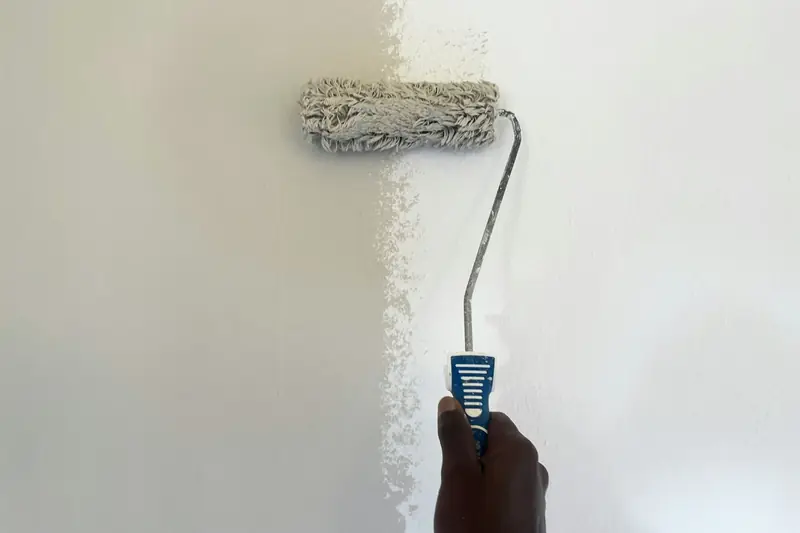
Short answer
After preparing the walls, paint the ceiling first, then the walls, then doors, frames and skirting. On each surface, cut in the edges with a brush, then roll the open area in sections while the edge is still wet. Apply two thin coats, leaving the recoat time on the tin between them, and remove masking tape while the last coat is still slightly soft.
What you need
- Roller frame with a medium-pile sleeve for walls; extension pole
- Roller tray or scuttle
- Angled brush, about 50 mm, for cutting in
- Stepladder
- Dust sheets and masking tape
- Stirring stick
- Damp rag for drips
- Bucket, water and a bin bag for clean-up
Step by step
Prepare first
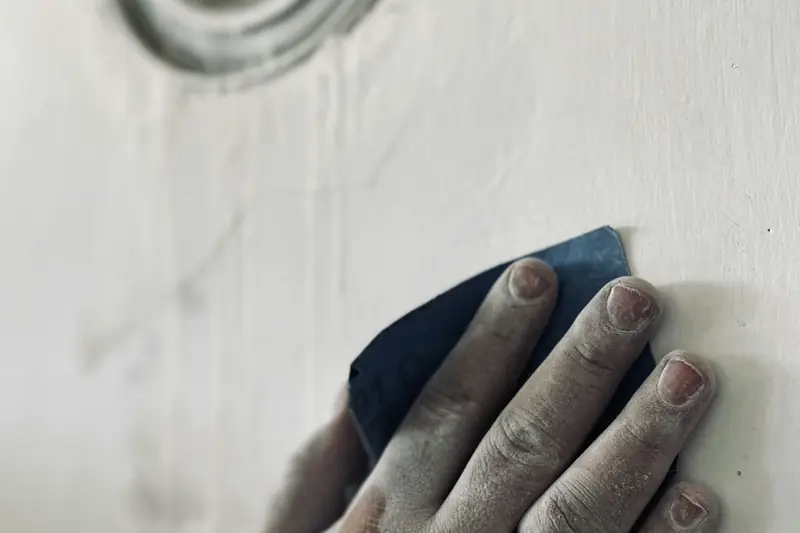
Clean, fill, sand and prime as in our wall preparation guide. Painting over a poorly prepared wall wastes the paint.
Ventilate and set up
Open windows, or run air-con or a dehumidifier on humid days. Good light matters: you need to see the wet edge. Stir the paint well and pour some into the tray.
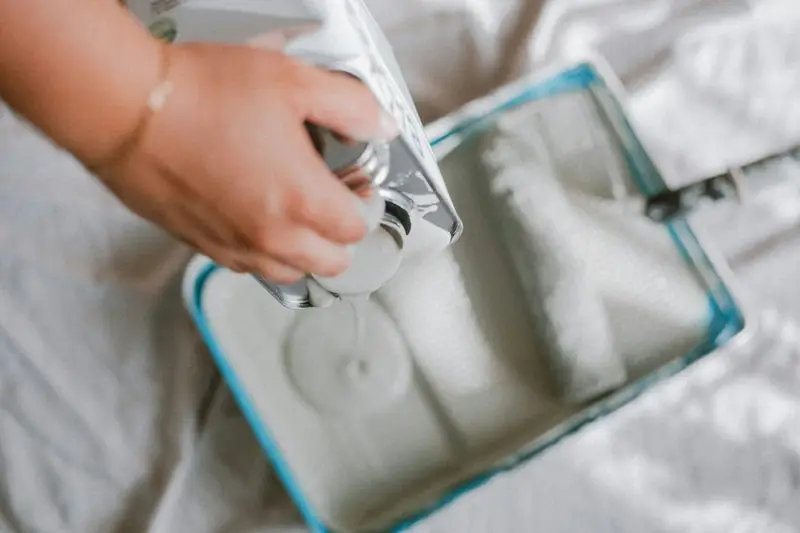
Cut in the ceiling edges
With the angled brush, paint a band about 5 to 7 cm wide along the edges of the ceiling and around light fittings.
Roll the ceiling
Load the roller evenly, roll off the excess on the tray, and work across the ceiling in strips parallel to the main window, keeping a wet edge. Don't press hard; let the roller do the work.
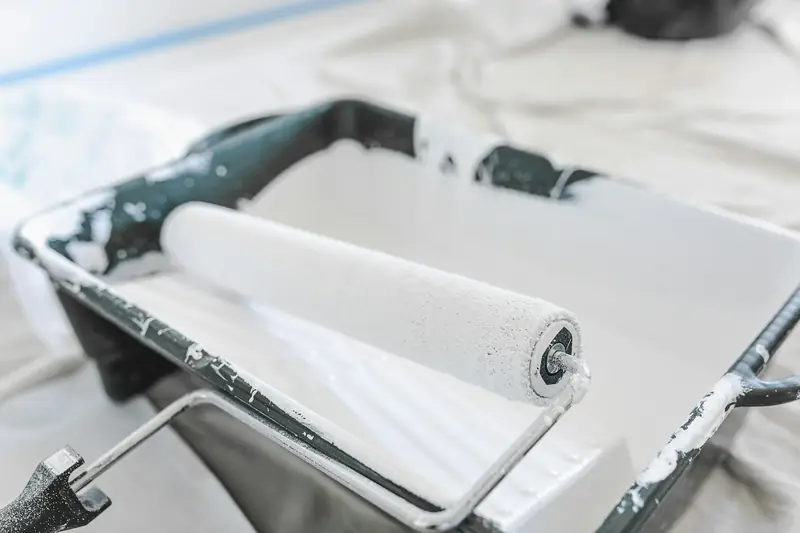
Cut in the walls
Brush a band along the ceiling line, corners, skirting, and around switches and frames. Cut in one wall at a time, so the edge is still wet when you roll.
Roll the walls in sections
Work on an area about one metre wide. Roll a W or M shape, fill it in without lifting the roller, then lay off with light, top-to-bottom strokes. Move on and overlap into the wet paint.
Check and leave to dry
Look along the wall against the light for missed spots, runs and roller marks, and fix them while wet. Then leave the coat to dry for at least the recoat time on the tin, longer in humid weather.
Apply the second coat
Repeat the cutting in and rolling. Two thin coats look better and last longer than one thick coat.
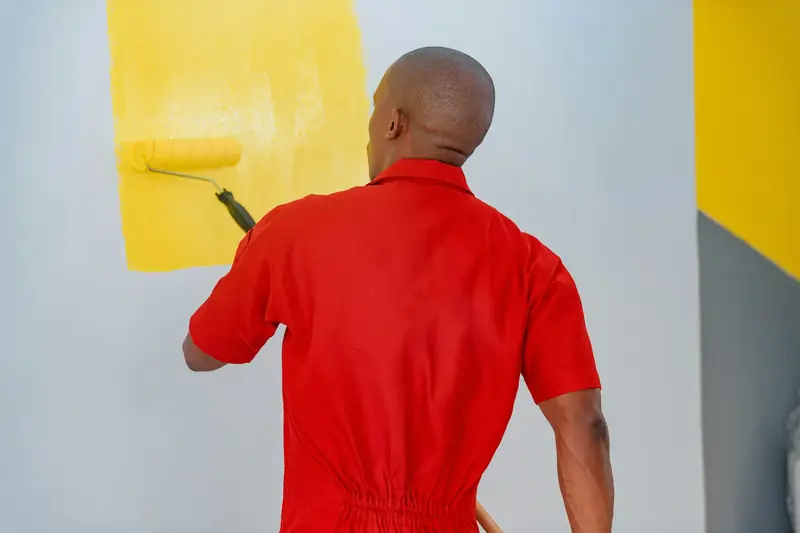
Paint woodwork and remove tape
Paint doors, frames and skirting last. Pull the masking tape off at an angle while the final coat is slightly soft, so it doesn't tear the paint film.
Clean up properly
Wash water-based paint out of brushes and rollers with water. Don't pour paint down the drain. Let leftover paint and wash water settle and dry, and keep the tin closed and labelled for touch-ups.
Planning the order of a whole flat
In a lived-in flat, work room by room so you always have somewhere to sleep and store furniture. Start with the rooms you can empty most easily. Paint corridors last, because everyone walks through them. In an empty flat, the order is simple: all ceilings, then all walls, then all woodwork.
Allow for drying time between coats, and remember that the room can't be used normally until it's dry. A two-bedroom flat with sound walls is usually painted over several days, not one.
Hong Kong conditions
- Humidity slows drying. The Observatory's normals show mean relative humidity above 80% from March to August. Paint feels dry to the touch but stays soft underneath for longer. Wait for the full recoat time, and run a dehumidifier or air-con with the windows closed if the air is very damp.
- Typhoon and rain days. Don't paint near open windows during heavy rain. Close windows and use air-con instead.
- Heat and direct sun. In summer, west-facing walls can get hot. Paint dries too fast on hot surfaces and shows lap marks. Paint those walls in the morning.
- Building house rules. Painting is quiet work, but your building may still restrict renovation hours, lift use for materials and where you can store items. Check with management first.
Fixing common problems
| Problem | Likely cause | Fix |
|---|---|---|
| Lap marks or stripes | Rolling over paint that has started to dry | Keep a wet edge; work in smaller sections; sand lightly and recoat. |
| Patchy, dull spots | Unprimed filler, or uneven coverage | Spot-prime the patches, then apply another full coat. |
| Runs and drips | Too much paint on the roller or brush | Brush out while wet; once dry, sand flat and touch up. |
| Blistering | Paint over damp, dirt or heat | Scrape, find the cause, let it dry, prime and repaint. |
| Peeling at edges | Tape pulled too late, or poor prep | Cut back neatly, sand, prime and touch up. |
Disposing of leftover paint in Hong Kong
Never pour paint, or the water you washed brushes in, into drains or toilets. Keep usable leftovers sealed and labelled for touch-ups. For small amounts of unwanted water-based paint, let the paint dry out completely in the tin before throwing it away with household waste. For solvent-based paints and thinners, ask your building management or the Environmental Protection Department how to dispose of them in your area.
What affects the cost of painting a room
We don't publish prices. The time a room takes depends on:
- Wall and ceiling area, and ceiling height.
- How much preparation the walls need.
- The number of coats, which rises with a big colour change.
- How much cutting in there is: built-in cabinets, window frames, beams and pipes all add time.
- Whether the room is empty or furniture has to be moved and protected.
- Doors, frames and skirting, which take longer than walls.
Read more in our painting cost factors guide.
Rather leave it to us?
WhatsApp a few photos of the walls, your location and the dates that suit you. We'll visit for free, check the walls and send a written quotation. No obligation.
Book your free on-site quoteQuestions about this
Should I paint the ceiling or the walls first?
The ceiling. Drips and spatter fall down, so you deal with them when you paint the walls.
How many coats of paint do I need?
Usually two coats on a prepared wall. A big colour change, bare plaster or a strong colour can need a primer or a third coat.
How long between coats?
At least the recoat time printed on the tin. In humid Hong Kong weather, allow longer, and make sure the first coat is dry right through.
Why do I see roller marks after drying?
Usually because the paint was rolled over an area that had started to dry. Keep a wet edge, work in smaller sections and lay off with light strokes.
Can I stay in the flat while you paint?
Usually yes. We plan the order of rooms with you at the visit so you can keep living at home for most jobs.
Sources
Public sources we used for the Hong Kong facts on this page:
- Hong Kong Observatory: Monthly means of meteorological elements, 1991–2020
- Environmental Protection Department: Construction noise
More painting guides
How to prepare walls for painting
Clean, fill, sand, prime: the prep that decides how long a paint job lasts.
9 min read →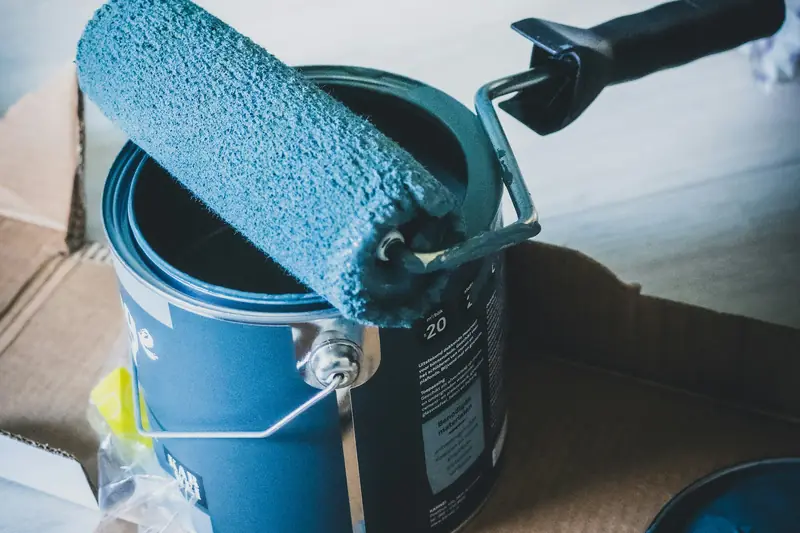
How much paint do I need?
Measure your room and work out litres, with a worked example.
7 min read →DIY or hire a painter?
An honest checklist to decide, plus Hong Kong building and noise rules.
8 min read →
Related services
Book your free on-site quote.
WhatsApp us a few photos of your walls, your location and the dates that suit you. We'll arrange a free visit, from Mid-Levels to Stanley, Discovery Bay or anywhere else in Hong Kong.
Book your free on-site quoteWhatsApp +852 9282 6014