How to prepare walls for painting.
Most paint problems start before the first coat. Here is the prep, step by step, the way it should be done in a Hong Kong flat.
Book your free on-site quote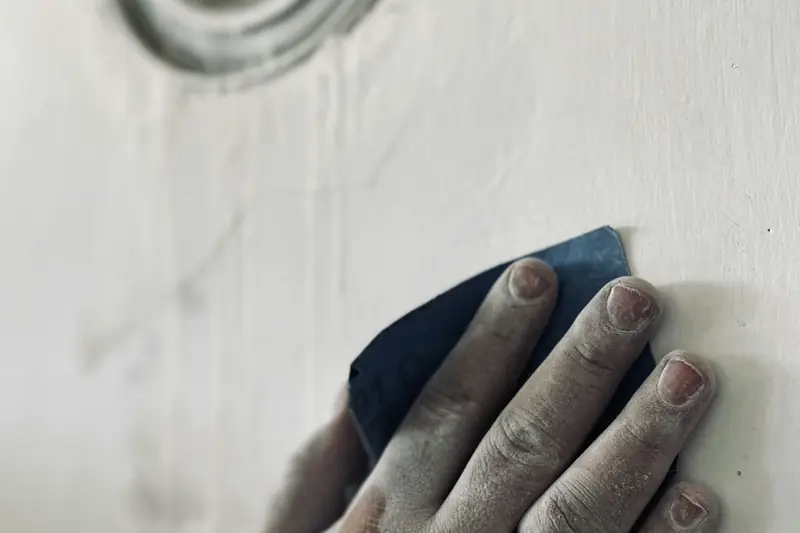
Short answer
Protect floors and furniture, wash the walls, scrape off anything loose, fill cracks and holes, sand the repairs flush, remove the dust, then spot-prime the patches and any stains. Let every filler and primer dry fully before the first coat. In Hong Kong's humid months, allow longer drying times and keep the room ventilated.
What you need
- Dust sheets and plastic sheeting
- Painter's masking tape
- Sugar soap or a mild detergent, sponge and bucket
- Scraper and filling knives (narrow and wide)
- Ready-mixed filler for small holes; powder filler or skim plaster for larger areas
- Sanding block or sponge, medium and fine grit
- Damp cloth or vacuum with a brush head
- Primer or stain-blocking primer suited to the surface
- Torch or work light
Step by step
Clear and protect the room
Move furniture to the centre and cover it. Cover the floor edge to edge, and tape the sheet down so it can't slide. Take off switch and socket plates if you're comfortable doing so, with the power off, or mask them neatly. Cover air-con units and window frames.
Inspect the walls in raking light
Hold a torch flat against the wall. Shadows show up dents, ridges, old drips and hairline cracks that you won't see in normal light. Mark each defect lightly with a pencil so none are missed later.
Wash off grease and dirt
Kitchens, door frames, light switches and the wall behind a sofa collect grease that stops paint from bonding. Wash with sugar soap or a mild detergent, rinse with clean water and let the wall dry completely.
Scrape loose and flaking paint
Run a scraper over any blistered, flaking or chalky areas. Anything that lifts must come off; paint over loose paint fails with it. Feather the edges where old paint stops so the step doesn't show through.
Fill cracks and holes
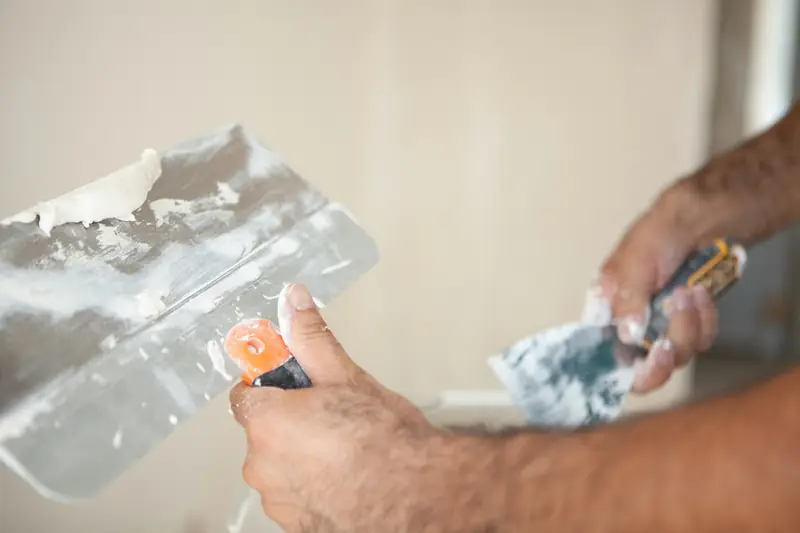
Open hairline cracks slightly with the corner of a knife so the filler can key in, brush out the dust and press filler in firmly. Overfill a little, because most fillers shrink as they dry. Deep holes are filled in two or three thin layers, each one dry before the next.
Sand the repairs flush
Once the filler is fully dry, sand it level with the wall with a medium grit, then finish with fine grit. Lightly sand glossy old paint too, so the new coat can grip. Run your hand over each repair: you should not feel an edge.
Remove every bit of dust
Wipe walls with a barely damp cloth or vacuum them with a brush head. Dust left on the wall ends up in the paint as grit.
Spot-prime repairs and stains
Prime bare filler, bare plaster and any patches you scraped back. Use a stain-blocking primer over water marks, nicotine or old mould stains (only after the cause has been fixed), otherwise they bleed through the topcoat.
Mask edges and do a final check
Tape skirting boards, door frames and window frames. Check the wall again in raking light. Any repair that still shows will show more once it's painted.

Why preparation matters more than the paint
Paint is a thin film. It copies the surface beneath it: every crack, ridge, grease mark and patch of loose paint will show through or make the new coat fail. That is why a careful painter can spend as long preparing a room as painting it, and why a quote that skips preparation is not comparable with one that includes it.
Prep also decides how long the job lasts. Paint applied over dust, grease or damp plaster can peel or blister within months, especially in a humid Hong Kong summer.
What is different in Hong Kong
- Humidity and drying time. The Hong Kong Observatory's 1991–2020 normals put mean relative humidity at about 78% for the year, and above 80% from March to August. Filler, plaster and primer dry more slowly in that air. Use the dry, cooler months for bigger prep jobs if you can, run a dehumidifier or air-con, and follow the drying time on the tin as a minimum.
- Hairline cracks are common. Concrete and plaster in Hong Kong flats move with temperature and humidity. Hairline cracks in plaster are usually cosmetic. A crack that is wide, growing, stepped, or that comes back after filling needs a closer look before you paint. See our guide to mould and wall cracks.
- Building rules on noise. Hand sanding and filling are quiet, but power sanders and drills count as noisy renovation work in most buildings. Check your house rules or ask management for the permitted hours before you start.
- Dust in shared spaces. Bag sanding dust and old paint flakes, and don't leave them in lift lobbies or corridors.
Common mistakes
- Painting over filler that is still damp inside, so it later shrinks or blisters.
- Skipping primer on bare filler, which leaves dull 'flashing' patches in the topcoat.
- Painting straight over mould stains. The stain comes back, and so does the mould, unless the damp is fixed first.
- Leaving sanding dust on the wall, which makes the finish gritty.
- Filling a crack that keeps moving. It opens again within weeks.
What affects the cost of preparation
We don't publish prices, because preparation depends entirely on the walls. These are the factors that change the amount of work, and the things we check at a free on-site visit:
- How many cracks and holes there are, and how wide or deep they are.
- Whether old paint is sound, or flaking and has to be scraped back.
- Whether the walls need a full skim coat to make them flat, or only patch repairs.
- Stains that need a stain-blocking primer, and whether any damp has been fixed.
- Wallpaper that has to come off first.
- Access: ceiling height, stairwells, and how much furniture stays in the room.
Our painting cost factors guide explains the rest. Preparation is listed separately in our written quotations, so you can see exactly what is included.
When to call a painter
Small repairs in one room are a reasonable DIY job. Call us when there are many cracks or a whole wall needs skim coating, when old paint is flaking across large areas, when stains keep returning, or when you need the flat ready by a handover date. See our crack repair and plastering service.
Rather leave it to us?
WhatsApp a few photos of the walls, your location and the dates that suit you. We'll visit for free, check the walls and send a written quotation. No obligation.
Book your free on-site quoteQuestions about this
How long should filler dry before painting?
Follow the drying time on the product as a minimum. Deep fills and humid weather need longer. If the filler still feels cool to the touch, or looks darker than the surrounding wall, it is still damp inside.
Do I need to prime the whole wall?
Not always. Bare filler, bare plaster and stained areas need primer. A whole wall needs priming when it is new plaster, heavily patched, or when you are changing from a dark colour to a light one.
Can I paint over old paint without sanding?
Only if the old paint is sound, clean and matt. Glossy paint should be lightly sanded so the new coat can grip, and anything flaking must be scraped back.
Should I fill hairline cracks or leave them?
Fill them. A hairline crack in plaster is usually cosmetic. If it reopens quickly or is getting wider, have it checked before you paint over it again.
Is preparation included in your quotation?
Yes. We check every wall at the free on-site visit, and the preparation needed is listed in the written quotation.
Sources
Public sources we used for the Hong Kong facts on this page:
- Hong Kong Observatory: Monthly means of meteorological elements, 1991–2020
- Buildings Department: Common building defects
- Environmental Protection Department: Construction noise
More painting guides
How to paint walls and ceilings
The order, the technique and the drying times for a clean, even finish.
10 min read →
Humidity, mould and wall cracks
Why walls stain and crack in Hong Kong, and what to fix before painting.
11 min read →
Choosing paint and finish
Matt, eggshell, satin or gloss, and how to read a paint tin in Hong Kong.
8 min read →
Related services
Book your free on-site quote.
WhatsApp us a few photos of your walls, your location and the dates that suit you. We'll arrange a free visit, from Mid-Levels to Stanley, Discovery Bay or anywhere else in Hong Kong.
Book your free on-site quoteWhatsApp +852 9282 6014